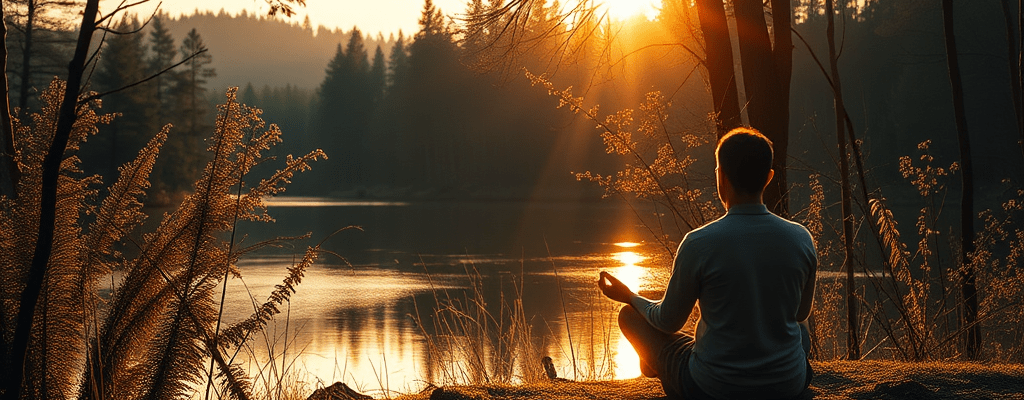
When life becomes a performance and silence feels like a stranger, solitude emerges not as an escape but as a sacred return.
In the hustle and bustle of today’s fast-paced world, life can feel like a performance, with each of us playing our part under the scrutiny of societal expectations. In such a world, silence often feels like a distant stranger, something to be feared rather than embraced. Yet, it is in those quiet moments of solitude that true transformation begins—not in the chaos, but in the sacred spaces of stillness we often shy away from.
Solitude is not to be confused with loneliness. It is not a withdrawal from the world, but a return—a homecoming to the depths of our being. It is the gentle knock on the door of our soul, calling us to come back to ourselves. In solitude, we don’t escape from the world; we reconnect with the truth of who we are. It is within this stillness, this pause from the noise, that we find everything we’ve been seeking.
“In solitude, there is healing. In silence, there is truth. And in stillness, the soul remembers itself.”
Why Solitude Matters in Today’s Overstimulated World
In an age dominated by constant digital distractions, endless notifications, and a relentless pace of life, solitude has become a rare treasure. Yet, in its rarity lies its power. In a world that glorifies perpetual motion and external validation, solitude is often misunderstood and misinterpreted as loneliness or isolation. But solitude is not a void—it is a rich, fertile ground for growth and healing.
When we retreat into solitude, we are not retreating from the world; we are retreating to our inner world, the one that has been drowned out by the noise of everyday life. It is here, in this sacred space, that self-awareness blooms. When we choose stillness, we choose to listen to the voice of our inner wisdom, which has been silenced by the chaos of external demands.
Solitude is a profound act of self-love and self-respect. It is the space in which we make room for ourselves, in a world that constantly seeks to pull us in a thousand different directions. It is here that we rediscover our core, free from the influence of others, and reconnect with our purpose. It is not about disconnecting from the world; it is about reconnecting with ourselves so we can show up more fully in the world.
By choosing stillness, we choose self-awareness. We turn down the volume of the world and tune in to the voice of our inner wisdom.
The Healing Power of Solitude
The healing potential of solitude is boundless. In the quiet moments we spend with ourselves, we can begin the work of emotional and spiritual healing. Solitude offers us the opportunity to process our feelings, confront old wounds, and embrace our imperfections with compassion. It is through this aloneness—free from the distractions of the world—that we can face ourselves and make peace with the parts of us we have ignored or denied.
When we allow ourselves the space to be alone, we allow our emotions to surface, and in doing so, we allow ourselves to heal. Emotional healing happens not in the rush of daily life, but in the sacred pause, in the stillness where we can breathe and feel. Here, in this quiet space, we can confront buried emotions, release them, and move forward with clarity and peace.
Furthermore, solitude fosters mental clarity. In the absence of constant external stimuli, our minds are free to find focus and insight. The mental fog that clouds our decision-making dissipates, and we are able to think more clearly, seeing our lives from a fresh perspective. This clarity paves the way for spiritual alignment—a reconnection with our deepest values, desires, and the purpose that drives us.
This sacred pause is where healing begins. You don’t need to fix everything—just feel it, face it, and flow through it.
Solitude is Not Isolation—It’s Integration
Solitude is not about withdrawing from the world in fear or shame. It is about reconnecting with the essence of who we are. It is an act of integration, where we take the fragments of ourselves—those pieces scattered by daily demands and responsibilities—and bring them back together into a whole.
Consider the great spiritual figures of history: Jesus, Buddha, Rumi—all of them retreated into solitude, not as a means of escape, but as a way to return to themselves, to meet life more fully. Their solitude was not an evasion, but a tool for deeper understanding. In their aloneness, they found their true selves, and in doing so, they found the strength to change the world.
When we embrace solitude, we are also embracing the possibility of spiritual awakening. In the quiet, our souls begin to stir, and in that stirring, we reconnect with our innermost truth. The voice of intuition becomes clearer, guiding us toward a life of greater peace and purpose. Solitude teaches us that life’s most profound truths are not found in the external world, but within ourselves.
Spiritual Awakening Through Stillness
Solitude is a powerful catalyst for spiritual awakening. It is in the stillness of the soul that we remember who we truly are, beyond the roles we play and the identities we have adopted. The noise of the world can obscure our vision, but in the silence of solitude, our hearts awaken to deeper truths.
In solitude, intuition grows louder, and the inner peace we crave becomes more accessible. It is not through striving or searching externally that we awaken to our true selves, but through surrendering to the stillness within. It is through embracing silence that we hear the whispers of our soul, leading us to a place of deep peace and understanding.
When we give ourselves permission to rest in solitude, we open the door to a new way of being. Life gains more meaning, and we are no longer driven by the frantic pace of the world. Instead, we move through life with intention, rooted in the quiet strength of our inner selves.
Practical Ways to Embrace Solitude
If solitude feels daunting, start small. It is not necessary to embark on long retreats or seek seclusion in remote places to experience the benefits of stillness. Begin with small moments of intentional silence:
- Set aside 10 minutes a day for mindful breathing or quiet reflection.
- Take a solo walk, free from your phone or other distractions.
- Journal your thoughts, exploring the depths of your inner world.
- Create a designated space in your home—a quiet corner where you can retreat to reconnect with yourself.
The more you practice solitude, the more comfortable and natural it will feel. These small, consistent moments of stillness will lead to profound transformation over time. They will open the door to greater emotional resilience, mental clarity, and spiritual peace.
Final Thoughts: Come Home to Yourself
Solitude is not a rejection of the world; it is a return to the heart of who you are. It is the sacred gift that allows you to rediscover your true self, free from the noise, free from distractions, and free from the expectations of others. In solitude, you find your essence, and in that space, you are reminded that everything you’ve been searching for is already within you.
If you’ve been longing for peace, clarity, and connection, remember this: don’t run outward to find it. Go inward, and discover the quiet, powerful presence that resides within. The sacred gift of solitude awaits you, holding space for your healing, growth, and awakening.
Embrace it. For in that silence, you will find everything you’ve ever needed.


Great post, thanks for sharing
LikeLiked by 4 people
Thanks a lot for your inspiring feedback
LikeLiked by 2 people
”The sacred pause”. It speaks loudly to my spirit! Thank you!
LikeLiked by 3 people
That designated space idea is a good one. I used to teach it to my young writers. 👌
LikeLiked by 4 people
“The Sacred Pause” speaks loudly to my Spirit. Thank you!
LikeLiked by 4 people
Appreciated
LikeLiked by 3 people