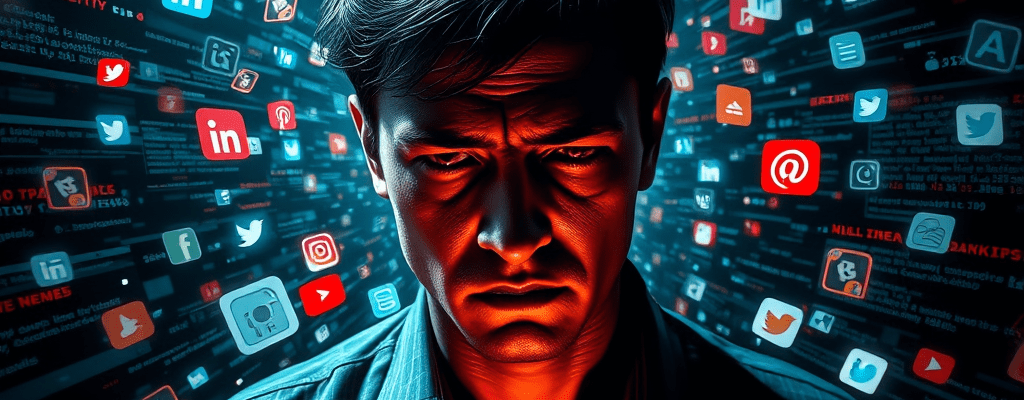
In an age where information flows faster than our ability to process it, fear has found a new home—one not bound by physical danger but by the constant barrage of news, social media, and digital overload. From the fear of missing out to the dread of global crises, we live in a world where fear is as accessible as the swipe of a screen. But what if we could reframe this modern fear—not as something to avoid, but as a force we can harness for growth and action?
In the age of information, fear has evolved into a multi-faceted, ever-present force. With the proliferation of digital technologies, constant connectivity, and the ceaseless flow of information, fear has become a ubiquitous experience, often amplified by the very tools that were meant to empower us.
We live in a world where data, news, and opinions travel faster than ever, yet the sense of control over our own emotional and psychological well-being seems to diminish with each passing day. But is this modern fear truly an inherent part of our nature, or is it a product of the information age? And if so, how can we begin to navigate it?
The Nature of Modern Fear
Historically, fear was a primal emotion—a survival mechanism hardwired into our brains to protect us from immediate dangers, such as predators or environmental threats. This “fight-or-flight” response served us well in a world where survival was often a matter of life or death. However, in the digital age, fear has found a new, more insidious form. It no longer originates only from tangible threats but from the invisible, overwhelming forces of constant media saturation, social comparison, and global instability.
In the modern era, we are constantly plugged into an interconnected web of information. The news cycle bombards us with stories of political unrest, natural disasters, economic turmoil, and health crises. On social media, we are exposed to curated realities—an endless stream of perfect lives and idealized achievements that can trigger feelings of inadequacy or the fear of missing out (FOMO). The constant influx of information has conditioned us to respond to situations with heightened alertness, perpetuating an ongoing state of anxiety and unease.
The Role of Technology in Amplifying Fear
While technology has brought about remarkable advances in communication, it has also become a double-edged sword when it comes to fear. The internet, social media platforms, and news outlets have transformed the way we access and process information. What once took days or weeks to disseminate now spreads globally in a matter of seconds. While this can be a tool for empowerment and education, it can also create a breeding ground for fear.
The 24/7 news cycle, driven by algorithms that prioritize sensational stories, often feeds into our most primal fears. The more dramatic, the more likely it is to grab attention and trigger an emotional reaction. We are left feeling as though the world is falling apart, yet we feel powerless to act.
This constant exposure to negative information can create a false sense of danger, even in the absence of an immediate threat. Our minds, constantly engaged with the next crisis, struggle to process the sheer volume of data, which leads to a state of perpetual stress and fear.
Social media compounds this by fostering a culture of comparison. Platforms like Facebook, Instagram, and Twitter provide an endless parade of seemingly perfect lives, curated images of success, beauty, and happiness.
For many, this leads to a fear of not measuring up, of not achieving enough, or of being left behind. We compare our behind-the-scenes to others’ highlight reels, creating an illusion of failure that feeds into our deepest insecurities. This fear, though invisible and abstract, feels as real and pressing as any physical threat.
Fear of the Unknown: Global Challenges and Misinformation
The information age has not only heightened personal fears but also intensified our collective anxieties. In an increasingly interconnected world, global challenges such as climate change, pandemics, political instability, and economic volatility have become central to our collective consciousness. The spread of information about these issues often comes with a sense of urgency and helplessness, feeding into fears about the future of our planet, our societies, and our own lives.
Misinformation also plays a critical role in shaping modern fear. The rise of fake news, conspiracy theories, and unverified claims on the internet has created a fragmented landscape where truth is often difficult to discern.
This uncertainty breeds fear, as we struggle to know what is real, who to trust, and how to make informed decisions about the world around us. In a time when fact and fiction are often blurred, fear becomes a natural response to the overwhelming sense of confusion and doubt.
The Psychological Toll of Information Overload
The constant exposure to information, especially negative or fear-inducing content, has a profound impact on our mental health. Our brains were not designed to process the sheer volume of stimuli we encounter daily.
Studies have shown that information overload can lead to anxiety, stress, and even depression. The pressure to stay informed, to keep up with the latest news, and to participate in digital conversations can be overwhelming, leaving us feeling emotionally drained and mentally fatigued.
Moreover, the fear of missing out (FOMO) on the latest trends, developments, or social interactions has become a common psychological condition in the digital age. People fear being left behind or not being part of the conversation, leading them to spend increasing amounts of time-consuming information that often adds little value to their lives. This fear of exclusion can exacerbate feelings of loneliness and isolation, further compounding the mental and emotional toll of modern life.
Transforming Fear into Opportunity
However, fear in the information age is not an insurmountable obstacle. Understanding its nature and recognizing its role in our lives is the first step toward transforming it into a force for personal growth. Fear, when harnessed correctly, can be a powerful motivator—spurring us to take action, question the status quo, and grow beyond our comfort zones.
To navigate fear in the digital age, we must first become conscious of its triggers. Limiting exposure to negative news, taking breaks from social media, and engaging in mindful practices can help mitigate the overwhelming effects of information overload. By choosing how and when to engage with information, we regain a sense of control over our emotional responses.
Additionally, we must shift our mindset. Rather than allowing fear to paralyze us, we can use it as a tool for personal growth. Fear of failure can drive us to push harder toward our goals. Fear of the unknown can spur us to seek knowledge and understanding. Fear of loss can encourage us to cherish the present moment and strengthen our relationships.
Conclusion: Navigating Fear in the Digital Age
The modern era has undoubtedly transformed how we experience and respond to fear. The information age, with its constant barrage of data, news, and social media, has amplified fear in ways we have never experienced before. Yet, fear is not a force that must control us. By understanding its origins, recognizing its impact, and learning to regulate it, we can transform fear from an obstacle into a stepping stone for growth and action.
In a world where information is abundant, the true challenge is not the fear itself but our ability to manage it. By embracing this challenge, we not only protect our mental well-being but also unlock the potential for resilience, innovation, and personal transformation. Fear, in the age of information, need not be a source of anxiety—it can be the catalyst for change and growth in our increasingly complex world.
 Life Inspiration
This is a thought-provoking article that beautifully captures how fear has transformed in the digital age. Thank you for this insightful perspective!👍🎉🌷
LikeLiked by 2 people
Thank you so much for your kind words! I’m glad you found the article thought-provoking. The digital age has certainly changed how we experience fear, and it’s great to know that this perspective resonated with you. Your feedback truly means a lot! 😊🌟
LikeLiked by 2 people
🙏
LikeLiked by 1 person
I understand that!
LikeLiked by 1 person