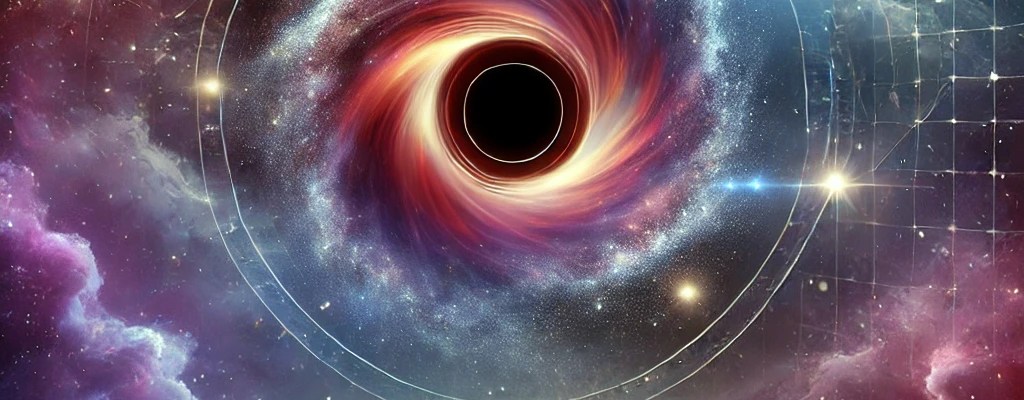
Beneath the surface of our everyday reality lies a universe brimming with profound mysteries—puzzles that challenge the very foundation of science and philosophy. What is dark matter, and why does it elude detection?
We are surrounded by cosmic enigmas that challenge the very foundations of our understanding. From invisible forces shaping galaxies to the mind-bending concept of parallel realities, the universe invites us to explore questions that defy easy answers. What secrets lie beyond the stars, hidden in the depths of time and space?
Let’s embark on a journey to uncover the most profound and realistic mysteries of the cosmos, mysteries that redefine what it means to be human in an ever-expanding universe.
1. The Nature of Dark Matter and Dark Energy
Dark matter and dark energy are perhaps the most perplexing components of our universe. Though they make up about 85% of the total mass and energy, they elude direct detection. Unlike ordinary matter, dark matter does not interact with electromagnetic forces, meaning it doesn’t emit, absorb, or reflect light. Scientists infer its existence through its gravitational effects on visible matter, such as the unexpected rotation speeds of galaxies. If galaxies relied solely on the visible mass, they would spin apart. The unseen glue keeping them together is attributed to dark matter.
Dark energy, even more enigmatic, is thought to drive the universe’s accelerated expansion. This discovery upended our understanding of cosmic evolution. The exact nature of dark energy is still unknown—some theories propose it might be a property of space itself, while others suggest it could be a dynamic field that changes over time. The study of dark energy and dark matter could revolutionize our understanding of the universe, potentially leading to new physics beyond the Standard Model.
Key Questions:
- Could dark matter be composed of yet-undiscovered particles?
Yes, one of the leading theories is that dark matter consists of particles that are fundamentally different from the ones making up ordinary matter. These hypothetical particles are often called Weakly Interacting Massive Particles (WIMPs) or axions. They don’t interact with electromagnetic forces, which is why they are invisible to current detection methods. Scientists are conducting experiments deep underground and in space (like the Alpha Magnetic Spectrometer on the International Space Station) to find evidence of these elusive particles. If discovered, they would represent a new kind of matter, adding a significant chapter to our understanding of the universe.
- Is dark energy a sign that our understanding of gravity is incomplete?
This is a possibility that many physicists are exploring. The leading theory is that dark energy is a property of space itself, causing it to expand. However, some researchers suggest that our current theory of gravity, based on Einstein’s General Relativity, might need modifications on a cosmic scale. Alternative theories, such as Modified Newtonian Dynamics (MOND) or f(R) gravity, propose adjustments to our understanding of gravity to explain the accelerated expansion without invoking dark energy. The truth could lie in a new, unified theory that merges quantum mechanics with gravity, possibly revealing a deeper layer of reality.
2. The Enigma of Black Holes
Black holes are cosmic phenomena where gravity is so intense that it warps space and time, creating a region from which nothing can escape. At the heart of a black hole lies the singularity, a point where density becomes infinite, and the known laws of physics cease to function. Einstein’s theory of general relativity predicts the existence of black holes, but the singularity remains a paradox, suggesting that our understanding of the universe is fundamentally incomplete.
Recent breakthroughs, such as the first-ever image of a black hole’s event horizon, have provided glimpses into these cosmic monsters. The Event Horizon Telescope (EHT) captured this iconic image in 2019, revealing a glowing ring around a dark shadow, confirming theoretical predictions. However, many questions remain, especially concerning what happens inside a black hole. Does matter get destroyed, or is it somehow preserved? Could black holes be wormholes to other parts of the universe or even to parallel dimensions?
Key Questions:
- What happens to information swallowed by a black hole? Is it lost forever?
This is known as the information paradox. According to quantum mechanics, information cannot be destroyed. However, when something falls into a black hole, it seems to disappear, suggesting a loss of information. This contradiction has puzzled scientists for decades. One promising solution is the Hawking Radiation Theory, which suggests black holes slowly emit radiation and lose mass over time, eventually evaporating. Recent theories propose that this radiation could encode the information that fell into the black hole, preserving it in a highly scrambled form. This concept is linked to the idea of the holographic principle, where all information within a volume of space can be represented on its boundary surface.
- Could black holes be the key to understanding quantum gravity?
Yes, black holes might be the best laboratory for studying quantum gravity, the elusive theory that seeks to unify Einstein’s relativity (which explains gravity) with quantum mechanics (which governs particles). The intense gravity of black holes creates conditions where both theories must be applied simultaneously. Insights from studying black holes, such as the event horizon and the singularity, could lead to breakthroughs in quantum gravity, potentially giving rise to a theory of everything.
3. The Concept of Time: Is It an Illusion?
Time is one of the most mysterious aspects of our existence. In everyday life, we experience time as a constant, flowing from the past to the future. Yet, according to Einstein’s theory of relativity, time is not absolute—it can stretch or compress based on speed and gravity. This phenomenon, known as time dilation, has been observed in experiments where clocks on fast-moving satellites tick more slowly compared to those on Earth.
Theoretical physics pushes this even further. The block universe theory suggests that all points in time (past, present, future) exist simultaneously, challenging the notion of time as a flowing river. If true, this means that our perception of time as a series of moments passing by is merely an illusion. It raises profound questions about free will and the nature of reality itself.
Key Questions:
- If time is an illusion, what does that mean for our understanding of the universe?
If time is indeed an illusion, it challenges our fundamental perception of reality. The block universe theory suggests that the past, present, and future are all equally real, and the flow of time is a construct of human consciousness. This could mean that everything that will happen is already determined, which challenges the idea of free will. However, the quantum mechanics interpretation introduces uncertainty, suggesting that multiple futures are possible. If proven, these theories could lead to new technologies, such as time manipulation or even communication across different points in time.
- Could mastering time manipulation unlock new dimensions of reality?
If we ever unlock the secrets of time, it could revolutionize our understanding of space and causality. The concept of closed time-like curves, which are theoretical paths in spacetime that loop back on themselves, suggests that time travel might be possible in certain conditions.
4. The Fermi Paradox: Where Are All the Aliens?
The Fermi Paradox remains one of the most profound questions in the search for extraterrestrial life. Given the sheer number of stars in our galaxy alone—over 100 billion—it seems statistically unlikely that Earth is the only planet with intelligent life. Yet, despite decades of searching, including efforts like the SETI (Search for Extraterrestrial Intelligence) program, we’ve found no convincing evidence of other civilizations.
Several explanations have been proposed. The Great Filter Theory suggests that life itself, or the leap to intelligent life, is extraordinarily rare. This filter could be behind us (suggesting humanity is special) or ahead of us (indicating a catastrophic event that most civilizations never surpass). Other theories include the possibility that advanced civilizations are using technology beyond our comprehension or deliberately avoiding us. Some even posit that we’re living in a “cosmic quarantine,” isolated until we reach a certain level of maturity.
Key Questions:
- Are we alone in the universe, or are we simply not listening correctly?
It’s possible that we are using the wrong methods to search for extraterrestrial life. Currently, efforts like the SETI program focus on detecting radio signals, but advanced civilizations may use entirely different communication methods, such as neutrino beams or quantum communication, which we haven’t yet developed the means to detect. Another theory is that alien civilizations might use self-replicating probes to explore the galaxy silently. These probes could be hidden or cloaked, making them hard to detect.
- Could advanced civilizations be communicating in ways we haven’t yet imagined?
Indeed, if civilization is thousands or even millions of years ahead of us, its technology could be indistinguishable from magic. They might use telepathic communication, laser pulses, gravitational waves, or other exotic methods beyond our current scientific understanding. Some theorists even suggest that advanced beings might exist in dimensions we cannot perceive, making their presence undetectable with our current tools. It’s also possible that advanced civilizations are deliberately avoiding us, a concept known as the Zoo Hypothesis, where Earth is under observation without interference.
5. The Mystery of Consciousness
Consciousness is perhaps the most intimate yet elusive mystery we encounter daily. Despite advances in neuroscience, we still lack a comprehensive understanding of how subjective experience—the “qualia” of being—arises from physical brain processes. This is often referred to as the “hard problem of consciousness,” a term coined by philosopher David Chalmers.
Some researchers propose that consciousness is an emergent property, arising from complex interactions among neurons. Others argue that it may be a fundamental aspect of the universe, much like space, time, or gravity. This latter view, known as panpsychism, suggests that even elementary particles might possess a form of consciousness. As science progresses, the study of consciousness could reshape our understanding of identity, free will, and the nature of reality itself.
Key Question:
- Can we develop a scientific theory of consciousness, or will it always elude measurement?
While we’ve made significant strides in understanding the brain, consciousness remains one of science’s biggest mysteries. Some neuroscientists believe that consciousness will eventually be explained as an emergent property of complex neural networks, similar to how weather patterns emerge from physical processes. However, others argue that consciousness might be a fundamental property of the universe, akin to space and time. Integrated Information Theory (IIT) is one of the leading scientific frameworks attempting to quantify consciousness, proposing that any system with a certain level of information processing has some degree of consciousness.
6. The Potential of Parallel Universes
The concept of parallel universes challenges our understanding of reality. According to the Many-Worlds Interpretation of Quantum Mechanics, every decision or quantum event results in a branching of the universe into multiple, non-communicating parallel realities. This means that countless versions of ourselves could be living out different lives based on different decisions.
Cosmic inflation theory adds another layer to this idea by suggesting that our universe is just one “bubble” in a vast multiverse, each with its own physical laws and constants. These ideas are not just theoretical musings; they stem from mathematical models that align with observations in quantum physics and cosmology. However, the lack of direct evidence means that the multiverse remains one of the most tantalizing and controversial theories in science.
Key Questions:
- If parallel universes exist, could we ever find a way to interact with them?
Theoretically, yes. If parallel universes are real, they might be accessible through quantum entanglement or wormholes. Some theories suggest that quantum particles can influence each other across these universes, a phenomenon that might be observable in experiments like the Large Hadron Collider. However, practical interaction with these universes is still purely speculative and would require technology far beyond our current capabilities.
- What implications would the multiverse have for our understanding of existence and reality?
The existence of a multiverse would fundamentally change our understanding of reality. It would imply that every possible outcome of every event is realized in some universe. This could explain certain quantum phenomena, like the behavior of particles in the double-slit experiment, where particles appear to exist in multiple states simultaneously. It would also have profound implications for philosophy, suggesting that all possible versions of reality exist, thus questioning the uniqueness of our own universe and the nature of our choices.
Conclusion: Embracing the Depth of Cosmic Mysteries
The universe is a puzzle with pieces that we are only beginning to fit together. Each discovery not only answers questions but also opens the door to new mysteries. From the invisible scaffolding of dark matter to the elusive nature of consciousness, the universe challenges us to expand the boundaries of human knowledge. These mysteries remind us of our place in the cosmos and invite us to keep exploring, questioning, and dreaming.
As we continue our journey, pursuing these cosmic enigmas will shape the future of science, philosophy, and our understanding of what it means to be truly alive in a universe filled with wonder.
 Life Inspiration
Wonderful post 🕺🎸
LikeLiked by 1 person
Thanks for your encouraging feedback 😀 🙏 😊
LikeLike