A reflection on the grace that meets us in the stillness of the season.
We wait for miracles to announce themselves with fanfare, yet the deepest light finds us in a whisper. In the stillness of winter, through the lens of ordinary moments, the world performs its most profound alchemy—transforming us when we are finally quiet enough to notice.
The Theology of the Empty Space
In the modern world, we have become addicted to the “Ever-Summer.” We demand constant growth, perpetual blooming, and a relentless brightness that leaves no room for the shadows to speak. But nature operates on a different rhythm. To understand the miracles of winter, one must first accept the necessity of the Void.
Winter is the earth’s Great Sabbath. It is the moment when the biological machinery of the world slows its revolutions, not out of exhaustion, but out of wisdom. When the leaves fall, they are not merely dying; they are returning their carbon to the soil, feeding the very roots that will support next year’s canopy. This is the first synthesis of winter: Loss is the prerequisite for Legacy.
The Clarity of the Skeleton
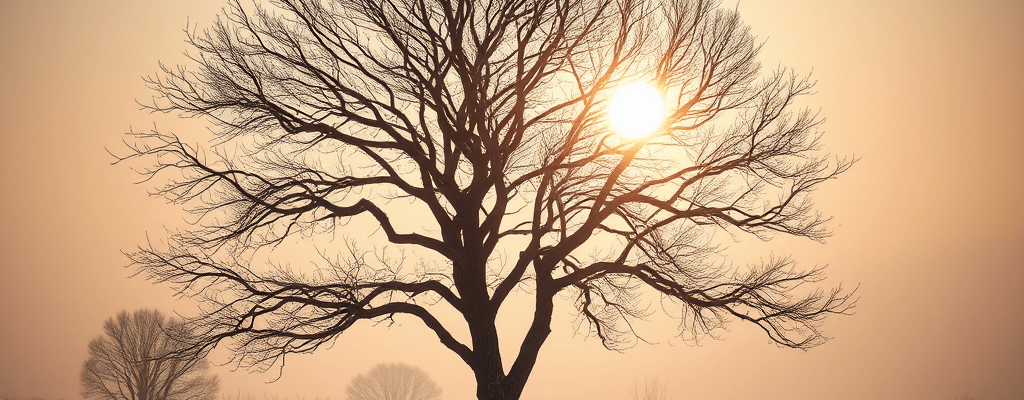
There is a profound honesty in a leafless tree. In summer, the maple and the oak are indistinguishable to the untrained eye—a mass of green shimmering in the heat. But in the dead of January, the “skeletal truth” emerges. We see the scars where branches were lost to old storms; we see the eccentricities of the trunk’s curve.
When the light finds us in winter, it doesn’t just illuminate; it interrogates. It strips away the decorative fluff of our lives and asks: What remains when the flowers are gone? The “quiet miracle” here is the discovery of our own structural integrity. We find that we are built of sturdier stuff than we imagined when the sun was high and the days were easy.
The Physics of Reflection
Winter light is different from the light of any other season. Because the sun sits lower on the horizon, the rays must travel through more of the earth’s atmosphere, scattering the shorter blue wavelengths and leaving us with a palette of gold, ochre, and violet.
This low-angle light performs a specific kind of alchemy. It doesn’t hit the world from above; it meets it at eye level. It seeks out the cracks. It illuminates the underside of things.
The Crystalline Lens
Snow and ice are not merely “weather”; they are a massive, planetary optical system. Each snowflake is a hexagonal prism, a tiny geometry of water that exists for a moment to catch a photon and bounce it back.1 When a field is covered in frost, the world becomes a mirror.
This leads to the second synthesis: Winter is the season of Reflection—both literal and metaphorical.
In the summer, the light is absorbed by the green world. In winter, the light is reflected by the white world.3 This suggests that when our external lives become barren or cold, our primary spiritual task is to become “reflective.” We must take the little light we are given and bounce it back into the dark spaces of our homes and our hearts.
The Biology of the Hidden Pulse
To the casual observer, a frozen pond is a tomb. But beneath the ice, a sophisticated “quiet miracle” is taking place.
| Element | The Winter Strategy | The Hidden Miracle |
| The Tree | Abscission (dropping leaves) | Tucking the “blueprint” into tight, resin-sealed buds. |
| The Frog | Cryoprotectants (natural antifreeze) | The heart stops, but the cell remains intact. |
| The Seed | Stratification (the need for cold) | Certain seeds cannot sprout unless they are first frozen. |
This biological reality offers profound wisdom for the human soul. There are certain “seeds” of character—patience, resilience, and deep empathy—that require the frost to crack their outer shells. Without the hardship of the winter season, these virtues would remain dormant forever. The “Light” finds us not when we are at our most productive, but when we are at our most receptive.
The Human HeartH: A Synthesis of Warmth
The final miracle of winter is the way it collapses the distance between us. In the summer, the world is expansive; we wander far, we stay out late, we are scattered. Winter draws a circle. It forces us toward the hearth, the table, and the lamp.
The light that “finds us” in winter is often the light we make for ourselves. It is the candle in the window, the glow of the e-reader under the covers, or the fire in the grate. This is the ultimate synthesis: When the universe withdraws its warmth, it provides us the opportunity to become the source of our own.
The Ancestry of the Spark: A History of Defiance
To understand why we seek the light in winter, we must look to the ancestors who watched the sun retreat with a primal, trembling uncertainty. Before we had the luxury of global supply chains and electric grids, the winter solstice was not a holiday; it was a threshold. It was the “Nadir of the Year,” the moment when the world held its breath to see if the sun would truly return or if the darkness would finally claim the horizon.
Across every culture, the response to this cosmic silence was the same: If the sky will not provide the light, we must create it.
The Ritual of the Return
From the Roman revelries of Saturnalia to the Nordic tradition of burning the Yule Log, humanity has long understood that light is more than a physical phenomenon; it is a psychological shield.
- The Yule Log: A massive piece of oak or ash, kept burning for twelve days, served as a literal anchor of heat. Its ashes were kept as charms against lightning—a beautiful metaphor for using the remnants of one light to protect against the volatility of the next.
- The Festival of Hanukkah: The miracle of the oil that lasted eight days is a synthesis of faith and physics. It suggests that our internal reserves—our “spiritual oil”—can be expanded by the sheer act of intent.
- The Diwali Lamps: Though celebrated in autumn, the Deepavali tradition of placing clay lamps (diyas) outside homes serves as a precursor to the winter mindset: the light must be placed on the threshold, at the boundary between the safe interior and the vast, unknown exterior.
This historical synthesis reveals a vital truth: Light is an act of defiance. When we light a candle in December, we are joining a million-year-old chorus of voices refusing to go quietly into the cold. We are signaling to the universe that our internal fire is independent of the solar cycle.
The Psychology of Stillness: Learning to Listen
If spring is the season of doing and summer the season of being, winter is the season of becoming. However, the modern mind finds this “stillness” terrifying. We equate silence with boredom and inactivity with failure.
The Horror of the Mirror
In the frenetic buzz of the warmer months, we can outrun ourselves. The light is so bright and the air so full of noise that we never have to look at the “unsorted” parts of our psyche. Winter removes the escape routes. The early sunset closes the door to the outside world, and the cold keeps us indoors.
This leads to what psychologists might call the “Wintering of the Soul.” The quiet miracles occur when we stop resisting the isolation and start using it as a laboratory. In the silence of a snow-covered evening, the “static” of social expectation drops away. We are left with the fundamental questions: Who am I when I am not producing? What do I love when no one is watching?
The Wisdom of the “Slow Frequency”
There is a neurological shift that occurs when we gaze into a fire or watch snow fall. Our brain waves move from the high-frequency Beta state (active problem-solving) into the Alpha or Theta states—the realms of creativity and deep intuition. The “Light” that finds us in winter is often the light of a new idea or a forgotten memory, rising to the surface because the surface is finally calm enough to reflect it.
The Architecture of the Frost: A Study in Resilience
We cannot discuss the miracles of winter without addressing the “cold” itself. In our quest for comfort, we often forget that cold is a sculptor.
The Hardening (Cold Hardiness)
In botany, there is a process called Cold Acclimation. As the days shorten, plants begin to shift their cellular chemistry. They move sugars into their cells to lower the freezing point of their sap, essentially turning their internal fluids into a restorative syrup.
The synthesis here for the human experience is profound: Hardship changes our chemistry. The “miracle” of a difficult winter—be it a literal season or a metaphorical “winter of the heart”—is that it forces us to concentrate our sweetness. We become less “watery.” Our convictions thicken. We develop a spiritual “antifreeze” that allows us to survive pressures that would have shattered us in the softness of July.
The Synthesis: The Light is a Choice
As we reach the final movement of this exploration, we realize that “When the Light Finds Us” is a misnomer. The light does not “find” us by accident. It finds us because we have cleared the clutter. It finds us because we have remained at the station, waiting, even when the world looked gray and abandoned.
The quiet miracles of winter are not spectacular events; they are subtle shifts in perception:
- The Miracle of Scale: Realizing how small we are against the blizzard, and how precious that makes our warmth.
- The Miracle of Contrast: Understanding that the stars are only visible because the sun has gone away.
- The Miracle of Potential: Knowing that every inch of snow is actually a blanket, insulating the billions of life forms that will erupt in a few months.
The Final Thaw
Eventually, the light changes. It turns from the crystalline blue of January to the watery, pale green of late February. We emerge from our houses and our hibernations, perhaps a bit paler, but structurally sounder.
We carry the winter with us into the spring. We carry the knowledge that the dark didn’t swallow us. We carry the memory of the blue hour and the heat of the hearth. We realize that the light didn’t just find us—the light was what we became while we were waiting.
The Coda: The Liturgy of the Lantern
To finish the winter is not merely to survive the cold, but to have been transformed by the crucible of the quiet. As the sun begins its slow, tectonic climb back toward the zenith, we find ourselves standing at the edge of the thaw, changed in ways the boisterous light of summer could never achieve.
The prose of our lives, once cluttered with the frantic verbs of doing, has been refined into the steady nouns of being.
The Poetry of the Long Shadow
There is a specific grace in the way a winter shadow stretches across the crust of the snow. It is elongated, elegant, and thin—a reminder that even when we feel stretched to our limits, we remain connected to the source of light. In the deep midwinter, we learn that the length of the shadow is not a measure of the darkness, but a testament to how low the light is willing to reach to find us.
We have spent these months in the “under-story.” Like the roots of the willow, we have pushed deeper into the dark, wet earth of our own subconscious. We have learned that the silence of a frozen lake is not the silence of death, but the silence of a grand orchestral pause. The music hasn’t ended; the conductor has simply raised the baton, and the world is holding its breath.
The Call to Action: Carry the Ember
As the seasons shift, the temptation is to rush headlong into the noise of the budding world—to forget the lessons of the hearth the moment the jacket is shed. But the true miracle of winter is only realized if we carry its stillness into our activity.
Therefore, let us commit to these Three Remembrances:
- Protect the Internal Glow: Do not let the return of the external sun extinguish the lamp you lit in the dark. Carry that sense of self-reliance—the knowledge that you can generate your own warmth—into every crowded room and busy street.
- Honor the Barren Branches: When you look at others, remember the “skeletal truth” you saw in the winter trees. Look past the decorative leaves of their success or the flowers of their charm. Seek the architecture of their character, the scars of their old storms, and honor the strength that remains.
- Practice the Pause: Even when the world demands a gallop, remember the Blue Hour. Find ten minutes in the heat of the coming summer to sit in the “winter of the mind”—that cool, reflective space where the ego is silent and the soul is heard.
The Final Synthesis
Winter is the universe’s way of asking us: “Can you love the world when it is unlovely? Can you find the light when it is hidden?” If you have watched the frost trace lace upon your window, if you have felt the sharp, clean sting of a January morning, and if you have found comfort in a single candle’s flame, then you have already received the miracle. You have discovered that the light does not just find you—it recognizes you. It sees in you a reflection of its own eternal persistence.
The ice will melt, the rivers will run, and the green will return with a deafening roar. But you will walk into that new world with a secret: The most profound growth happens in the dark, and the quietest miracles are the ones that never fade.
 Life Inspiration