Life’s pursuit of perfection can often feel like chasing a fleeting mirage, leaving us fatigued and unfulfilled. Yet, what if I told you that the very thing you strive to perfect—your life, your career, your relationships—might actually be holding you back from experiencing true fulfillment? Imagine the hours spent chasing flawless moments, only to be met with frustration, self-doubt, and the feeling that you’re never quite enough.
Now picture this: what if the key to living a richer, more meaningful life lies not in perfection, but in embracing the cracks, the messiness, and the unpredictable beauty of imperfection? It’s time to step off the endless treadmill of ‘perfect,’ and discover the hidden beauty that only imperfection can reveal
The Perils of Perfectionism
From childhood, many of us are conditioned to pursue perfection—whether it’s the straight-A student, a successful career, or a flawless social media profile. We are taught to present the best versions of ourselves, to hide our flaws, and to mask our struggles. In many ways, perfectionism becomes an invisible goal we chase, believing that if we can attain it, everything in our lives will fall into place.
However, this pursuit often comes with a hidden cost. Perfectionism can trap us in a cycle of self-criticism and fear of failure. It can paralyze us, making us afraid to take risks or try new things for fear of not measuring up to our own or others’ expectations. The pressure to be perfect can lead to burnout, anxiety, and a sense of never being “good enough,” even when we achieve success by traditional standards.
Perfectionism also makes us blind to the beauty of our flaws and the richness of our imperfect experiences. Instead of embracing the things that make us unique, we focus on hiding them or trying to fix them, missing out on the valuable lessons they bring. The truth is, that perfection is an illusion—an unattainable standard that leaves us perpetually dissatisfied.
Uncovering Beauty in Imperfection
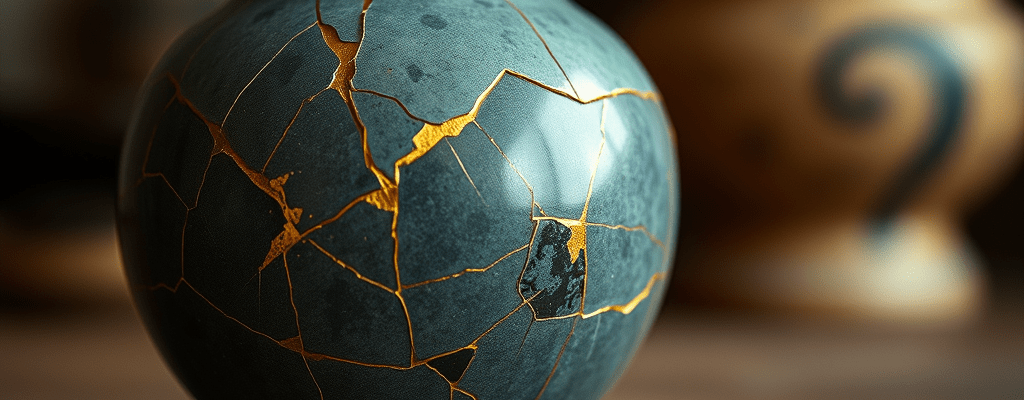
The Japanese art of Kintsugi offers a profound lesson about the value of imperfections. In this ancient practice, broken pottery is repaired with gold or silver lacquer, emphasizing the cracks rather than hiding them. Instead of discarding the broken pieces, they are transformed into something even more beautiful.
This philosophy reflects a deeper truth: the cracks, flaws, and imperfections are not things to be ashamed of—they are what make us whole. Our experiences, including our mistakes and hardships, shape who we are and add depth to our character. In the same way, the cracks in the pottery tell the story of its journey, our imperfections tell the story of our growth.
The Freedom of Letting Go
One of the most liberating things we can do is let go of the need to be perfect. This doesn’t mean we stop striving to improve or aim to be our best. It simply means we accept that we will never be flawless, and that’s okay. In fact, it’s more than okay—it’s essential for living a fulfilling life.
When we release the pressure of perfectionism, we open ourselves up to creativity and exploration. We allow ourselves to take risks, to make mistakes, and to grow in the process. We embrace the journey, with all its bumps and bruises, instead of fixating on an idealized outcome. We learn that true success doesn’t come from being perfect—it comes from being authentic, from showing up, and from continuing to move forward, no matter how imperfect the path may be.
The Power of Vulnerability
Vulnerability is often seen as a weakness, but it is actually one of the greatest strengths we can possess. When we allow ourselves to be vulnerable, we open up to genuine connections with others. We stop hiding behind a mask of perfection and instead show our true selves—flaws, insecurities, and all.
This vulnerability creates deeper relationships, both with ourselves and with others. It allows us to be more compassionate toward ourselves and to recognize that everyone is struggling with their own challenges, even if they don’t show it. Vulnerability also fosters creativity, as it encourages us to experiment, try new things, and embrace the possibility of failure without fear of judgment.
Finding Freedom in Imperfection
The idea of finding beauty in imperfections can be liberating. It means that we don’t need to have it all together and that the messy parts of life—the moments of doubt, failure, and growth—are what make life truly meaningful. These moments of imperfection are the very things that connect us to our humanity and to one another.
When we start to embrace our flaws and accept that life will never be perfect, we become free from the constant pressure to conform to societal expectations. We stop comparing ourselves to others and start appreciating our unique journey. We begin to see the beauty in the unpredictability of life, and in the small, quiet moments of joy that are often overshadowed by our pursuit of perfection.
The Beauty in Flaws
Flaws, both in ourselves and in the world around us, have the power to enrich our experiences and make them more beautiful. Just as a wildflower’s uneven petals give it character, our imperfections—whether physical, emotional, or intellectual—give our lives depth and authenticity. They remind us that we are human and that being human means we are imperfect.
In our relationships, embracing imperfections fosters stronger bonds. We no longer feel the need to project an image of ourselves that doesn’t align with who we truly are. By accepting each other’s flaws, we create space for authenticity and vulnerability, which leads to deeper, more meaningful connections.
In our personal growth, it is our flaws that serve as catalysts for change. It is when we stumble, make mistakes, and face challenges that we truly learn and grow. The most meaningful lessons come not from our successes, but from how we handle failure and imperfection.
Conclusion: The Liberation of Imperfection
The perfection trap is an illusion, a never-ending pursuit of something that doesn’t exist. But when we free ourselves from the need to be perfect, we uncover the hidden beauty in life’s imperfections. We learn to appreciate the cracks, the flaws, and the messy parts of our journey because they are what make us who we are.
The next time you find yourself chasing perfection, take a moment to pause and reflect. Embrace the imperfections in yourself and in the world around you. Recognize that life’s beauty is not found in its flawless moments but in the richness of its unpredictable, imperfect journey.
And remember, the broken pieces of your life—just like a piece of Kintsugi pottery—are what make you whole.
 Life Inspiration
8 thoughts on “The Perfection Trap: Uncovering Hidden Beauty in Life’s Imperfections”