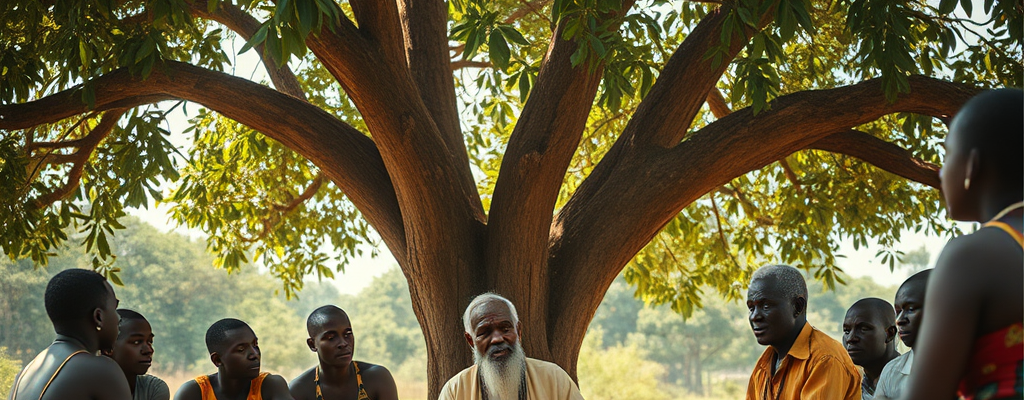
Proverbs have always been a powerful tool in African culture, passing down wisdom through generations in a way that is both poetic and profound.
Ghana, a country rich in heritage, is no exception. In Ghanaian culture, proverbs aren’t just used in conversations but are a part of the nation’s soul—a means of teaching, reflecting, and sharing life’s most valuable lessons.
Ghanaian proverbs are deeply rooted in the experiences of the people, their interaction with nature, and the understanding of life’s inevitable ups and downs. They capture the essence of life’s truths in a way that is relatable to all of us, regardless of where we come from. These simple yet powerful words offer insights into resilience, self-awareness, community, and perseverance.
Let’s explore some of the most amazing and inspirational Ghanaian proverbs about life and the wisdom they offer.
1. “The crab does not give birth to a bird.”
Meaning: This proverb reminds us that creatures give birth to their kind; the offspring will often inherit the qualities of their parents. It’s a reflection on how deeply connected we are to our roots, family, and heritage.
Lesson: This proverb speaks to the influence of upbringing and environment on who we become. However, it also invites us to reflect on personal growth: While we may inherit traits and values, we also have the power to shape our own identity and evolve beyond our circumstances.
2. “Wisdom is not in the head of one person.”
Meaning: No single person holds all the answers. This proverb emphasizes the value of seeking diverse opinions and learning from others.
Lesson: This is a beautiful reminder of the importance of collaboration and community. No matter how knowledgeable one person may be, wisdom is often a collective effort. Sharing experiences, listening to others, and learning from different perspectives lead to better decisions and richer understanding. It also humbles us, reminding us to stay open to learning from others.
3. “A bird does not change its feathers because the weather is bad.”
Meaning: Despite external hardships, one must remain true to themselves. The bird’s feathers represent identity and character, which shouldn’t change just because circumstances become difficult.
Lesson: Life will throw challenges our way, but that should not change who we are at our core. This proverb encourages perseverance and integrity—values that are critical when facing life’s toughest moments. It teaches us to remain authentic and consistent, even when the world around us seems unpredictable.
4. “The one who climbs a good tree gets a push.”
Meaning: If you pursue a noble cause, people will support and help you. This proverb reflects the belief that when you aim to do something beneficial for yourself and others, those around you will rally behind your efforts.
Lesson: The proverb promotes the importance of setting positive goals. When you strive for something that brings good to yourself or your community, the support you need will come. It reinforces the idea that we are not alone in our pursuit of success; when our intentions are good, help often arrives from unexpected places.
5. “Even the best cooking pot will not produce food.”
Meaning: Having the right tools or opportunities is not enough; action and effort are required to achieve results.
Lesson: This proverb is a call to action. It highlights the importance of not just having potential or resources but actually using them to create something meaningful. In life, we often have the talent, skills, or resources we need, but without effort and hard work, those things remain unused. It’s a reminder that action is the bridge between dreams and reality.
6. “The rain does not fall on one roof alone.”
Meaning: Life’s challenges are universal, and no one is immune to hardship. Problems are not isolated; they affect everyone at some point in time.
Lesson: This proverb offers a sense of solidarity in difficult times. It teaches us that suffering, struggles, and difficulties are a shared human experience. We are all in this together, and no one is exempt from life’s storms. It encourages empathy and reminds us to support one another because no one is alone in facing life’s challenges.
7. “If you want to go fast, go alone. If you want to go far, go together.”
Meaning: Quick results often come from individual efforts, but true, long-lasting success comes from teamwork and unity.
Lesson: This well-known African proverb stresses the importance of collaboration. While working alone may offer short-term gains, real and sustainable progress comes from joining forces with others. It’s a lesson in patience, humility, and cooperation. Whether in personal relationships, business, or life’s challenges, the journey is more fulfilling and impactful when shared with others.
8. “A person who stammers would eventually say ‘father’.”
Meaning: Persistence pays off. Even if progress is slow, you will eventually reach your goal.
Lesson: This proverb is a powerful reminder of the importance of perseverance. It teaches us that even if the road seems long or difficult, steady effort will get you where you want to be. It’s not about how fast you reach your goal but about staying committed and continuing despite obstacles.
9. “When the fool is told a proverb, its meaning has to be explained to him.”
Meaning: Wisdom is not accessible to everyone, and not everyone is open to understanding life’s deeper lessons.
Lesson: This proverb reminds us that wisdom comes to those who seek it. Not everyone will be able to grasp the profound meanings behind certain experiences or advice. It encourages us to be open-minded and reflective and to recognize that gaining true understanding often requires effort and contemplation. Wisdom cannot be forced upon someone who is unwilling to learn.
10. “The stranger’s eyes see only what is outside.”
Meaning: Outsiders often misunderstand the depth of a situation or culture because they only see the surface level.
Lesson: This proverb encourages us to look deeper into situations and not make judgments based on appearances. It speaks to the value of truly understanding people, cultures, and circumstances before forming an opinion. It also serves as a reminder that true insight comes from experience and connection, not from superficial observations.
Conclusion: Timeless Wisdom for Modern Life
Ghanaian proverbs carry deep-rooted wisdom that transcends time and place. These nuggets of truth, drawn from the everyday experiences of life, provide guidance and clarity in a complex world. They remind us of the importance of resilience, community, authenticity, and patience.
In today’s fast-paced world, where we often seek quick fixes, these proverbs encourage us to slow down, reflect, and embrace the lessons life has to offer. Whether you’re facing personal challenges, seeking wisdom in your relationships, or looking for inspiration in your journey, these timeless proverbs from Ghana provide a roadmap for navigating the complexities of life.
Let these proverbs serve as a reminder that no matter what life throws your way, there is wisdom in every experience and a lesson in every challenge. And perhaps, just like these proverbs, the simple truths of life are often the most profound.
 Life Inspiration
What intriguing proverbs your post has revealed! I pondered each with a sense of reverent thoughtfulness. Thanks for sharing. 🙏
LikeLiked by 1 person
It’s my pleasure to know that you found them relevant. Thanks for your Awesome feedback.
LikeLiked by 1 person
Beautiful post! 👌🤝🌷
LikeLike
Post acolhedor !
LikeLike
I’ve read that it is hard for outsiders to learn the language of Ghana because references to all of these proverbs are skillfully woven into conversation on a continual basis ~ one can learn to understand the individual words, but not what they are really saying, until one studies the whole culture.
LikeLike
You’re absolutely right! Ghanaian languages, particularly Akan, Ewe, and others, are rich in proverbs and cultural references that carry deeper meanings than the literal words. Proverbs are often used to convey wisdom, humor, or life lessons, making conversations layered and nuanced. To truly grasp what is being said, one must not only understand the words but also the cultural context, values, and experiences behind them. It’s like decoding a symbolic language, where meaning often lies between the lines. That’s what makes learning these languages both challenging and rewarding for outsiders.
LikeLiked by 1 person
And it is part of what makes being native there a particularly subtle and beautiful experience 👌
LikeLiked by 1 person
That’s an interesting observation! Do you also have proverbs or sayings in your native language that carry deeper meanings beyond the literal words? It’s always fascinating to see how different cultures use language to convey wisdom and life lessons.
LikeLiked by 1 person
We have sayings, but their use has always been much more peripheral among us. Rather than incorporate just a part of a saying, or a reference to that saying, into a sentence, we would tend to finish what we ourselves are saying, and then recite the proverb whole as an illustration. These days, as our literacy level plunges, even this practice has been largely scrapped, and even what we ourselves say is too often reduced to formula and further, to abbreviated formula. Subtlety and elegance really have very little place among us now, even with the very wealthy. Ghetto is cool.
LikeLiked by 1 person